I was at an art show a while back. I got the hell out pretty fast.
Not because of the art. That was an apparition. A riot of primary colours that put mortals in the shade. I had to get out because the place was packed. I needed breathable oxygen. There were more heads, waving arms and twitching lips than air molecules in the space above them.
I headed for an exit and immediately found myself with about 30 breathless others. Some were just dying for a fag, but most just craved air. And as one does, I got talking. We exchanged the immediate banter. More art than air, eh? Didn’t see the red canvas, too many heads, did you catch it? Then I asked why she was here. Artist? Art lover? Just curious? No. And she’d never heard of the artist, or the gallery.
So why? Her reason hit me. Freelancer, works from home, good earner, fun partner, two smashing kids. Not a thing wrong there. Well, perhaps one. She spends 90% of every day of every week at home, and 60% of that online. Which led her to why she was at the show. “I’m content for sure. But now and again, I’ve got to smash the rut”.
She’d just given me the best-ever case for creative advertising. The round-the-clock normality of everyday living.
Daily life doesn’t need to be gruelling or dull to incite an urge to escape. It’s a fundamental need. To quote Geoffrey Chaucer back in the 1300’s, familiarity breeds contempt. Human nature dictates that the better we know anything, the more likely we are to give it the occasional cold shoulder. No matter how much we rely on it. Or even adore it.
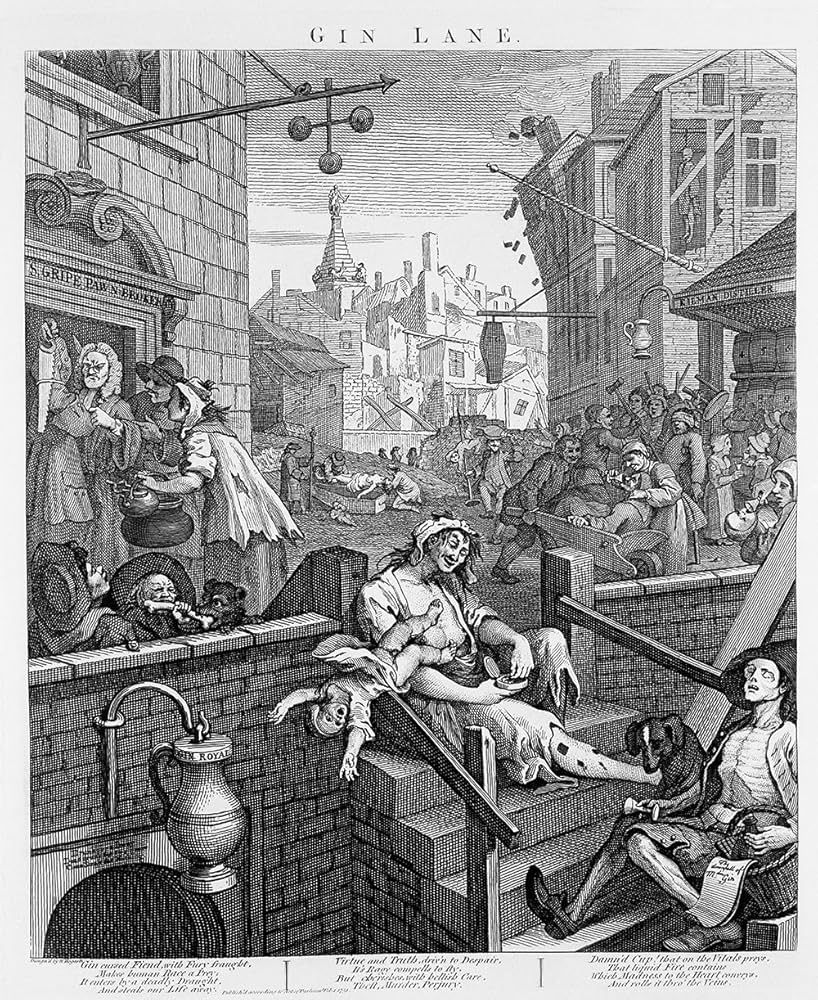
Lifestyles have indeed moved on. In the 1550’s, we emptied piss-pots out of mullion windows, the average lifespan was 50 and more people ground wheat for a living than read or wrote. For the majority, the topic of the day was getting through the next one. There again, there was William Shakespeare, a fine influencer if there ever was. An intelligent, amusing, bewitching break from the strife and shit. It’s thanks to the millions who heard, hollered and worshiped him then (and they certainly did) that we know him so well today.
Fast forward to World War II. For everyone then, life’s cautious regularity was its insurance policy. Cue the BBC, its comedians, big bands and panel games. Millions tuned in and, for a moment at least, forgot, chortled, chilled and remembered. There was a world out there, waiting.
Post-war rebuilding needed another discipline. We strove to prove that the past was the past and prospects were alight. We buckled down to make sure it all happened. And like those centuries of yore, creativity broke the grind to smooth the way. Cinema, TV, The Beatles, Vinyl, arts centres like the South Bank. And yes, advertising. Just as mad and deep and brilliant as the stuff in the papers, the films and the songs. It kept us dreaming and going.
On to today. Flying piss-pots and air-raids have gone, at least for now. More Europeans are comfortable and self-sustaining than ever, though some of that cruelly is at others’ expense. But much of it is thanks to routine. By not deviating from the line from A to B, and sticking to courses and goals.
Tech is increasingly setting those for us, often at the expense of our instincts and outside interests. There’s never been a greater need for wonderful creators to divert our gaze from our goals. To keep us sane, curious, moved, ready for the new. Human, even.
And yes, to interest us in things we might buy. More grey advertising will never pull anyone’s eyes from the grey. It will just make life greyer. Persuading takes new shades of new colours, in all their glory.
There is no other way. In our new linear process-driven existences, we will react and respond exponentially more to their antitheses: the fresh and the new. We need them more than ever. And what an unprecedented opportunity for anyone who comes up with them. i
Thank you, lady at the art show. I never got your name, but I love you.
 The Jolliffe